Case study · Heavy civil · Central Iowa
Concrete drone photography: the pour only happens once
Concrete work does not wait for a photographer. A bridge deck pour is a single continuous operation with a pump boom, a queue of mixers and a crew that cannot stop — and when it is finished, the thing you would have wanted to document is under sixty tons of concrete. We fly Manatt’s work on the day, at the hour, while it is happening — the same aerial photography and video we shoot for concrete and paving contractors across Iowa.
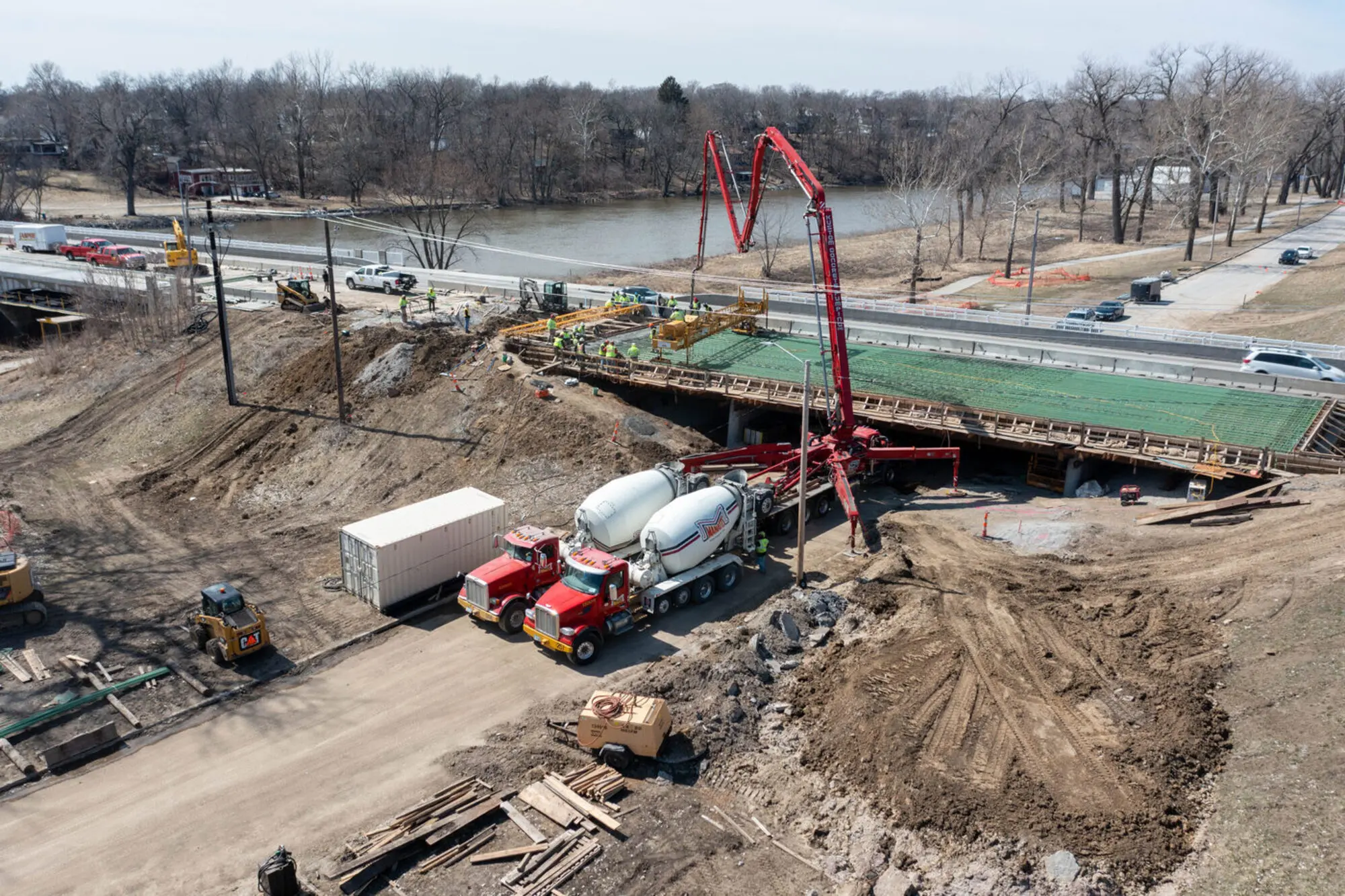
Bridge deck pour, March 2023 — pump boom over the deck, mixers staged below, traffic still running on the adjacent lane.
- Client
- Manatt’sIowa concrete and paving contractor
- Coverage
- StatewideDes Moines, Iowa City, Sleepy Hollow
- Captured
- 2023Across four separate projects
- Delivered
- 353 filesStills and video, per project
Work that moves
Manatt’s crews do not stay put. The work is short and intense, the interesting window on any given job might be four hours long, and it happens wherever the job is. In 2023 that meant a bridge deck pour near Des Moines, then Iowa City, then Sleepy Hollow, then back out again in October — four separate projects, one standard of coverage.
Be there on the right morning or the shot does not exist. Nobody gets a second attempt at a pour.
A deck pour is the part of this trade that people outside it never get to see. A pump operator placing by feel, a finishing machine walking its rails, and a line of mixers arriving on a schedule that genuinely cannot slip — all of it moving together for a few hours, and then it is concrete and it is done. Work like that has earned better than a phone held over a guardrail.
Two hours apart
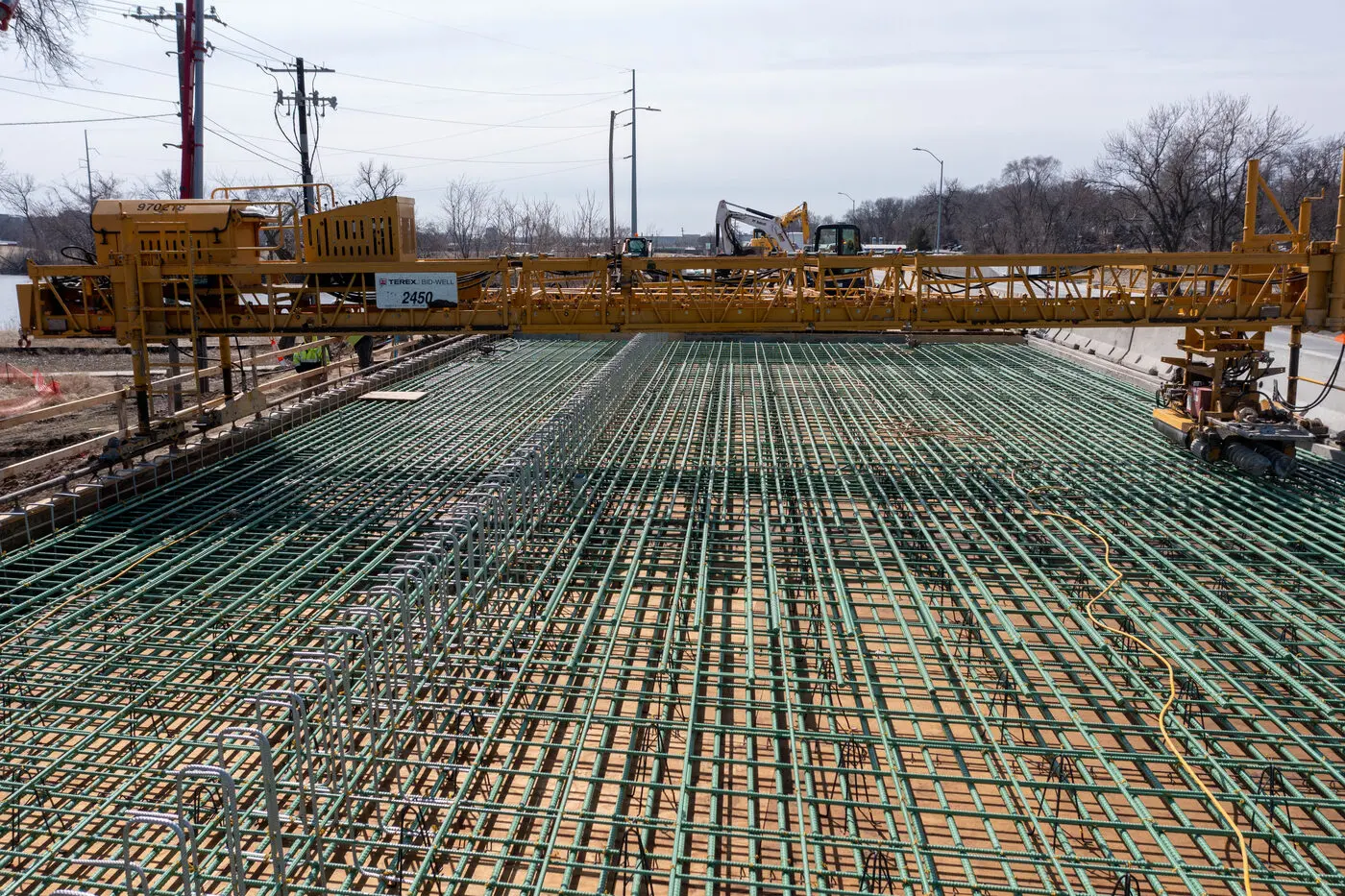
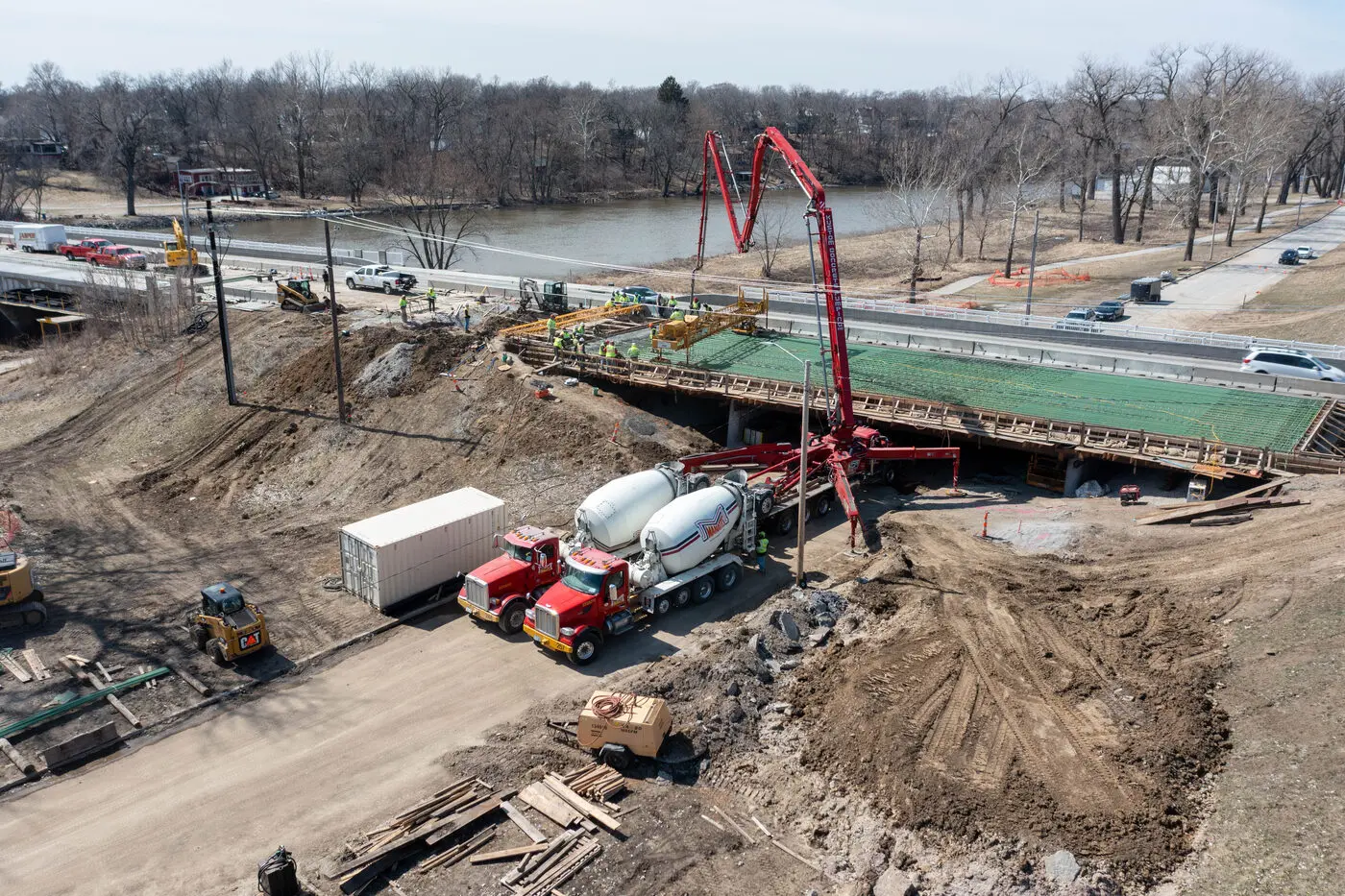
Neither of these frames can be recreated. The first stops existing the moment concrete moves; the second stops existing when the pour ends.
What it is for
Contractors use this material differently to owners. It goes into prequalification packages and bid presentations, where a photograph of your own crew running a deck pour cleanly is worth more than a stock image of concrete. It goes to the owner as a record of means and methods. And it goes on the wall, because people who build things are proud of them and rarely have a good picture.
What concrete contractors use drone coverage for
Most of the concrete companies who call are not after a documentation program. They want a set of good frames of their own work — for the website, for a bid, for the wall. That is a short, cheap job to fly and an easy one to schedule around a pour.
Deck pours & placements
Pump boom, mixer queue and crew in one frame, shot during placement rather than after it.
Slip-form & mainline paving
The train working, with enough altitude to show the run rather than just the machine.
Plants, yards & fleets
Ready-mix plants, aggregate stock and the truck fleet lined up — the shot every concrete website needs and almost none have.
Tilt-up & panel setting
Cranes and panels from above, where the sequence actually reads.
Flatwork & large slabs
Parking lots, industrial floors and site paving, finished and clean before anyone parks on them.
Marketing & prequalification
Stills and video licensed for your website, socials, bid books and prequal packages.
Related: construction progress video, progress photography and orthomosaic mapping for contractors who also need a scheduled record.
Questions concrete contractors ask
Do you photograph concrete pours while they are happening?
Yes — that is the point of it. A deck pour is one continuous operation, so the coverage is booked to the pour date and flown while the pump and the mixers are working. Once placement finishes, the rebar, the chairs and the mat are under concrete and cannot be photographed again.
What kinds of concrete work do you cover?
Bridge deck pours, slip-form and mainline paving, plant and yard photography, tilt-up panel setting, large flatwork and parking lots, and finished work for portfolios. Anything where the interesting window is short or the site is too big to photograph from the ground.
Can I use the images for marketing, bids and prequalification?
Yes. Most contractors use them exactly that way — website and social imagery, bid and prequalification packages, and a record of means and methods for the owner. Your own crew running a deck pour cleanly is worth more than a stock photograph of concrete.
How much notice do you need to cover a pour?
A call and a date is usually enough, and the earlier the better, because the shot depends on weather as much as scheduling. Pours move; the flight moves with them.
Is it safe to fly over an active site with a crew working?
Flights are planned so the aircraft is not operating over people who are not part of the operation, and everything is flown under FAA Part 107. In practice the aircraft works from over the deck, the water or the shoulder, not over the crew.
Running a pour, a slip form, a set, or anything else that happens once and is then hidden forever? Or just need decent aerial photos of your concrete work for the website?
Talk about coverage →Imagery flown under FAA Part 107 and delivered to Manatt’s. Equipment and site details described from the frames themselves.