Case study · Institutional · Marshalltown, Iowa
Marshalltown voted yes, and this went first
In July 2018 a tornado went through Marshalltown. Years later Miller Middle School — built in 1925 — still had ceilings and walls that leaked when it rained and rows of auditorium seats blocked off because they were broken. In November 2024 the town voted on fixing it, and sixty-eight percent said yes: $57 million in bonds toward a $106 million rebuild.
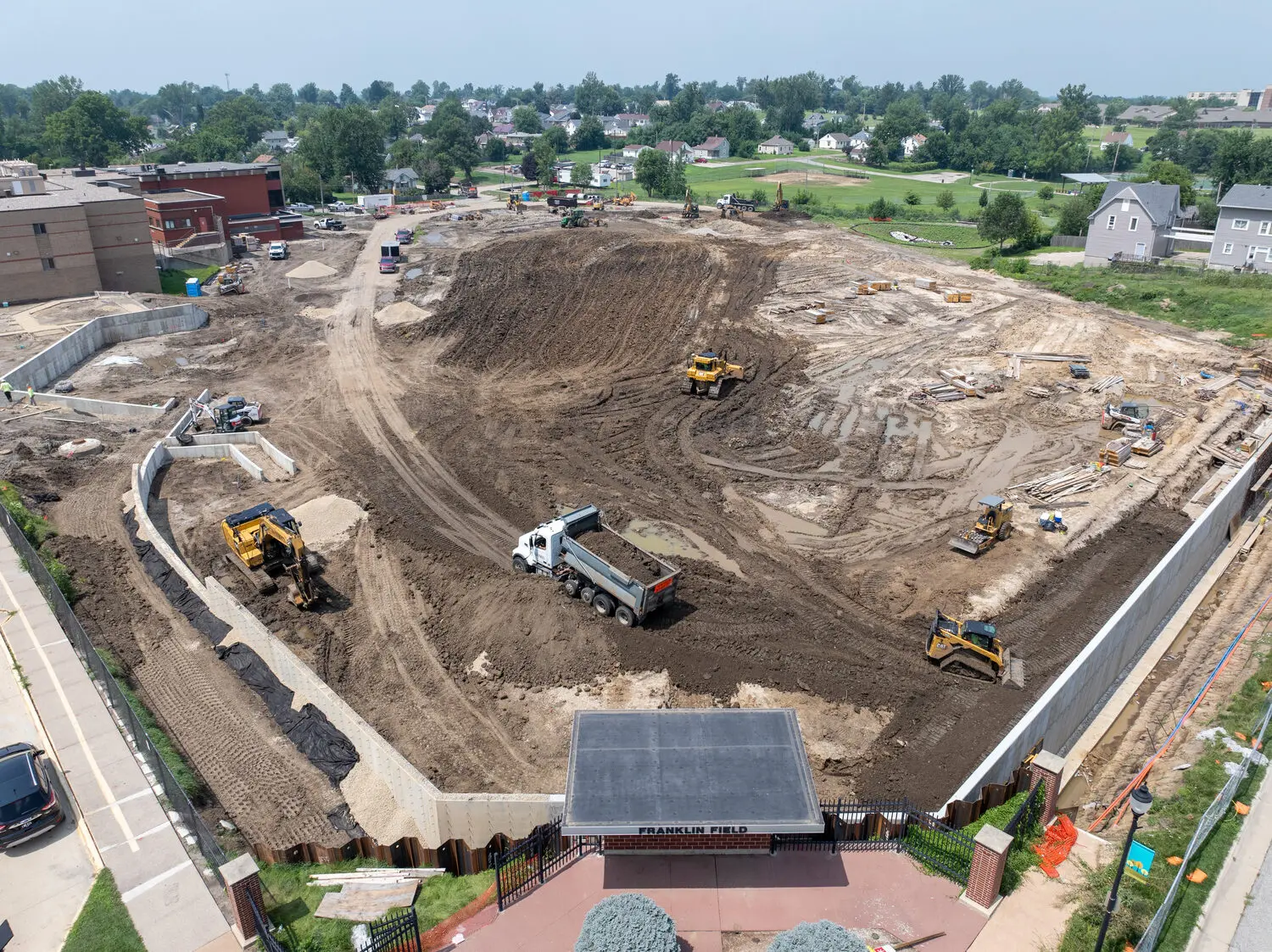
Franklin Field went first. Not the classrooms — the ground the whole town already gathers on, on Friday nights, in a place that had spent six years being reminded of what it lost. Boyd Jones brought it in inside a single construction season, and we flew it every two weeks from the first cut so nobody had to take the schedule on faith.
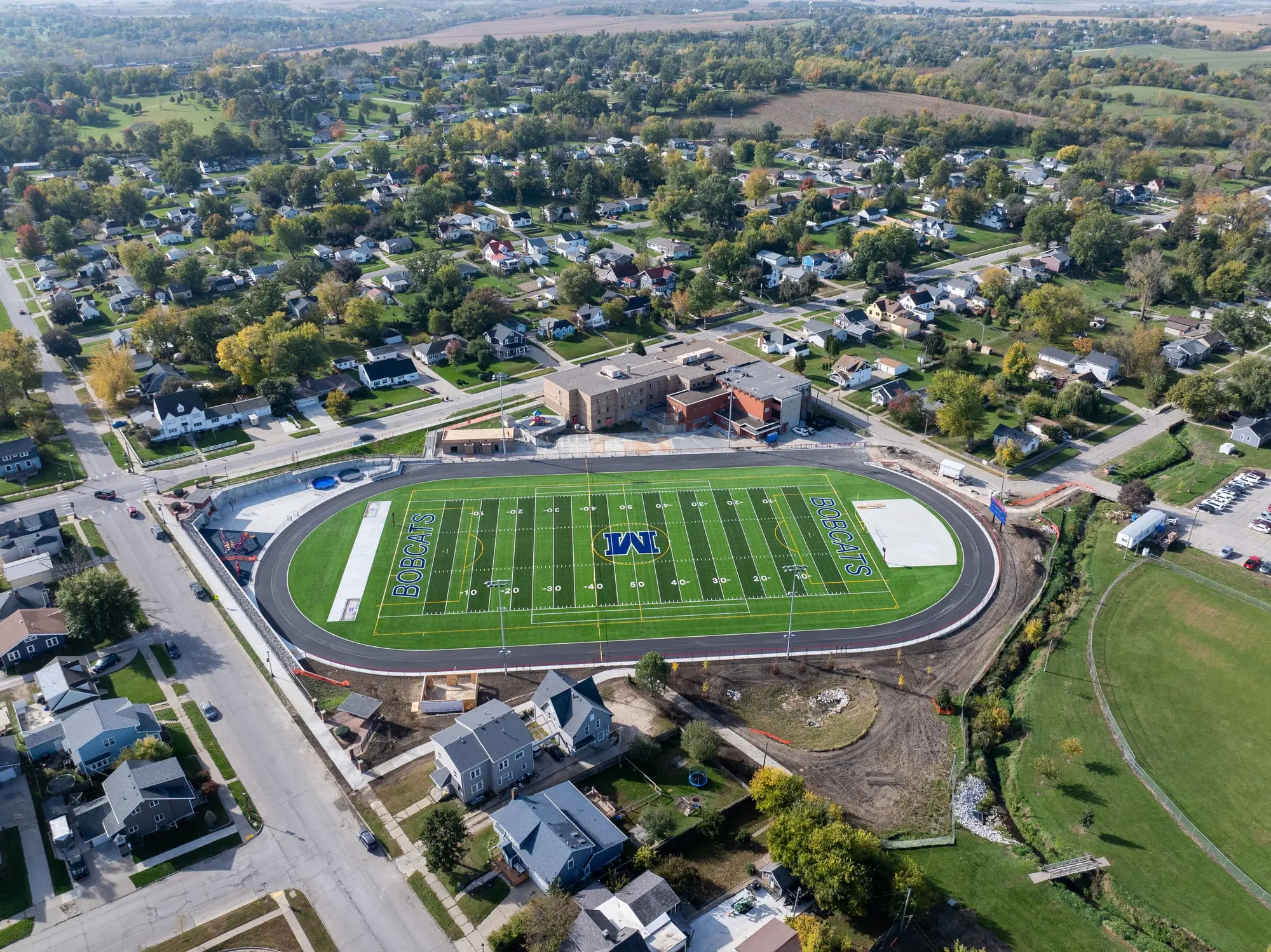
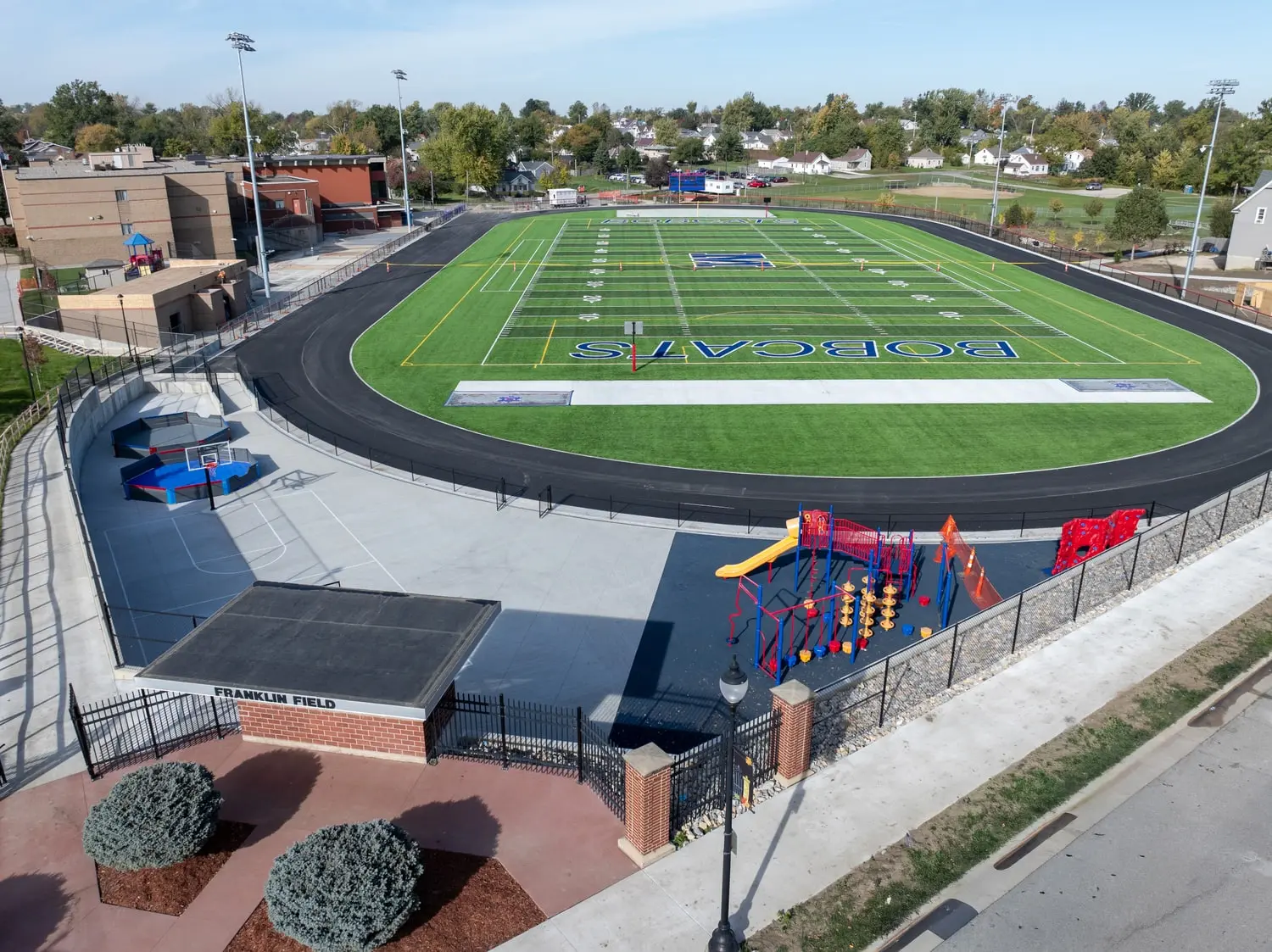
Franklin Field, 24 October 2025 — turf, track, lighting and bleachers complete, less than six months after the first cut. Marshalltown got its Friday nights back.
- The vote
- 68% yesNovember 2024, $57M in bonds toward a $106M rebuild
- Built by
- Boyd JonesFor Marshalltown CSD — phase one of Reimagine Miller
- Documentation
- 9 flights18 July – 19 December 2025
- Per visit
- 1 orthoPlus obliques and progress video
Boyd Jones set the cadence themselves
Nobody made them do it. On a project the whole town was watching, paid for with money the whole town had just voted to spend, Boyd Jones committed to monthly progress reports to the school board — and then held to them. That is a genuinely disciplined way to run a public build, and it is worth saying plainly, because plenty of contractors would not.
It is also exactly the kind of schedule aerial documentation exists to serve. A board meeting needs something a non-builder can look at and understand, month after month, showing the same ground from the same vantage so progress is evident rather than asserted.
The same record serves the build as well as the board. An orthomosaic that answers a school board question is also what the trades work from — one shared, to-scale reference for the general contractor, the subs and the district, instead of three accounts of the same week. The documentation followed Boyd Jones’ schedule; it never asked anyone to work around it.
Ground photos answer “what does this corner look like today.” An orthomosaic answers “what has moved since last month,” and it answers it to scale.
What five months looks like from above
Every flight below is the same site, flown to the same plan, processed into a high-resolution orthomosaic. Read left to right: retaining walls and earthwork through late summer, the track oval taking shape in September, turf going down in early October, and a finished field — turf, track, markings and lighting — by the end of the month.
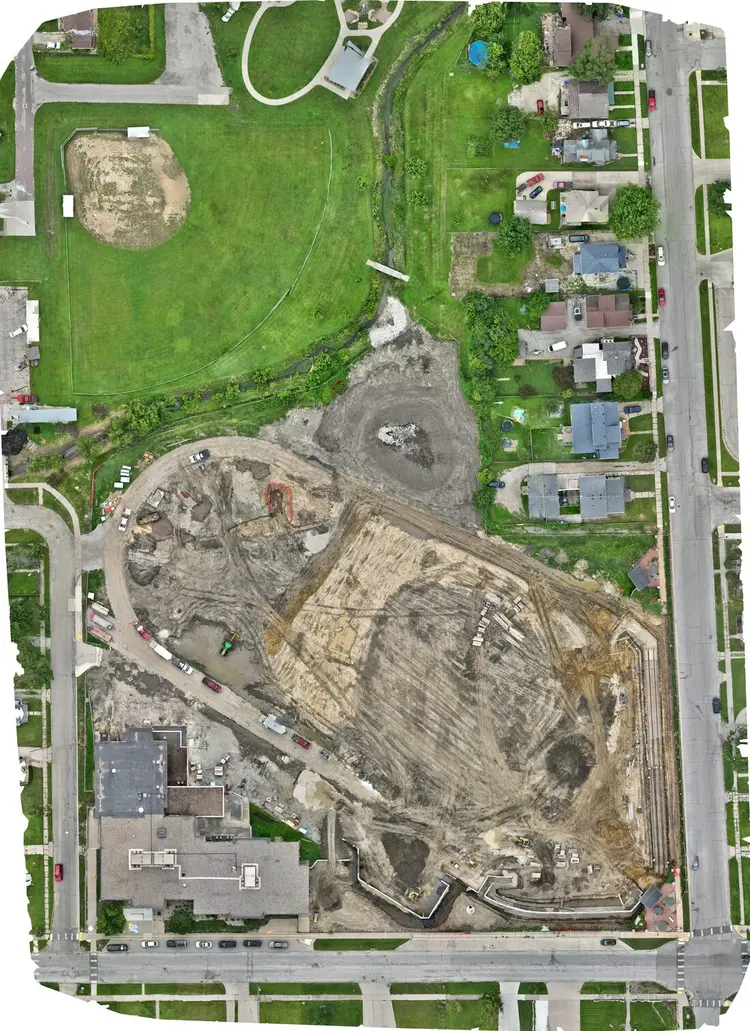
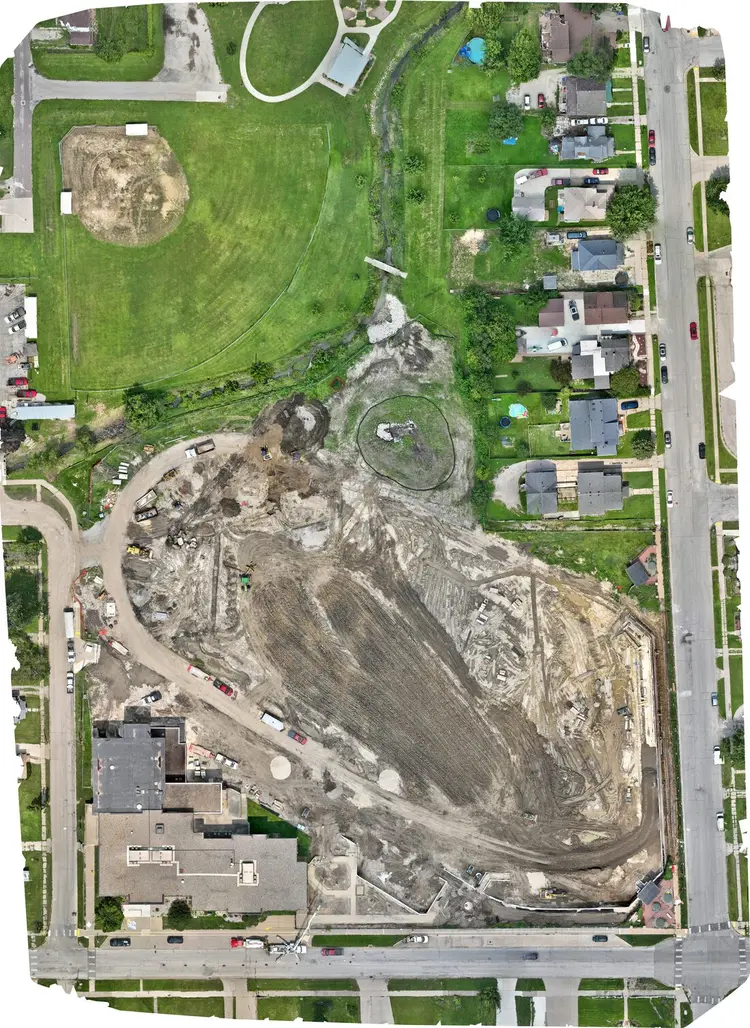
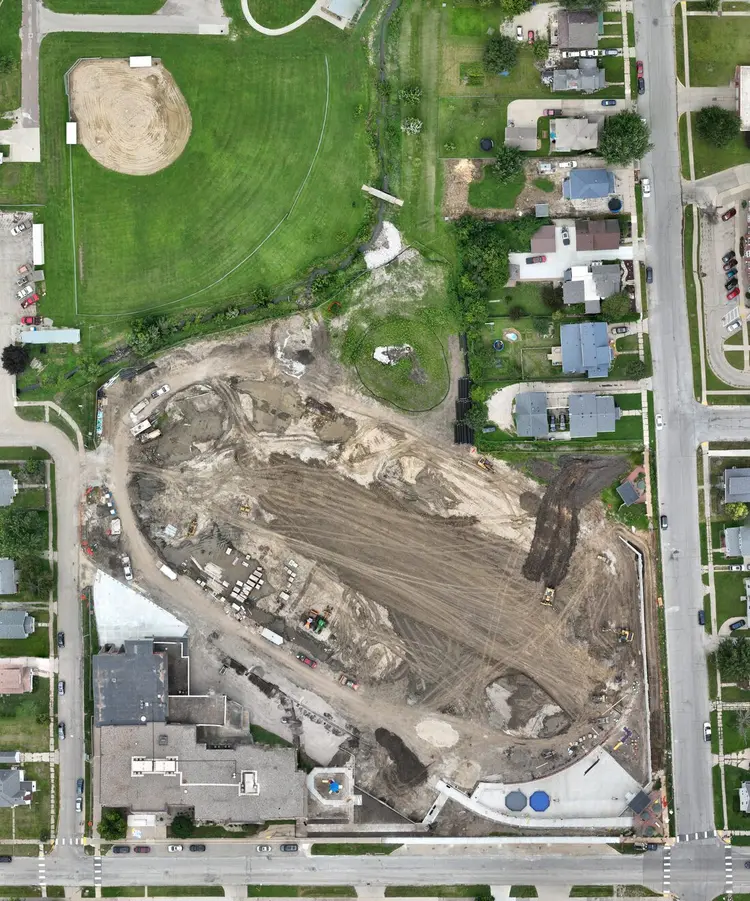
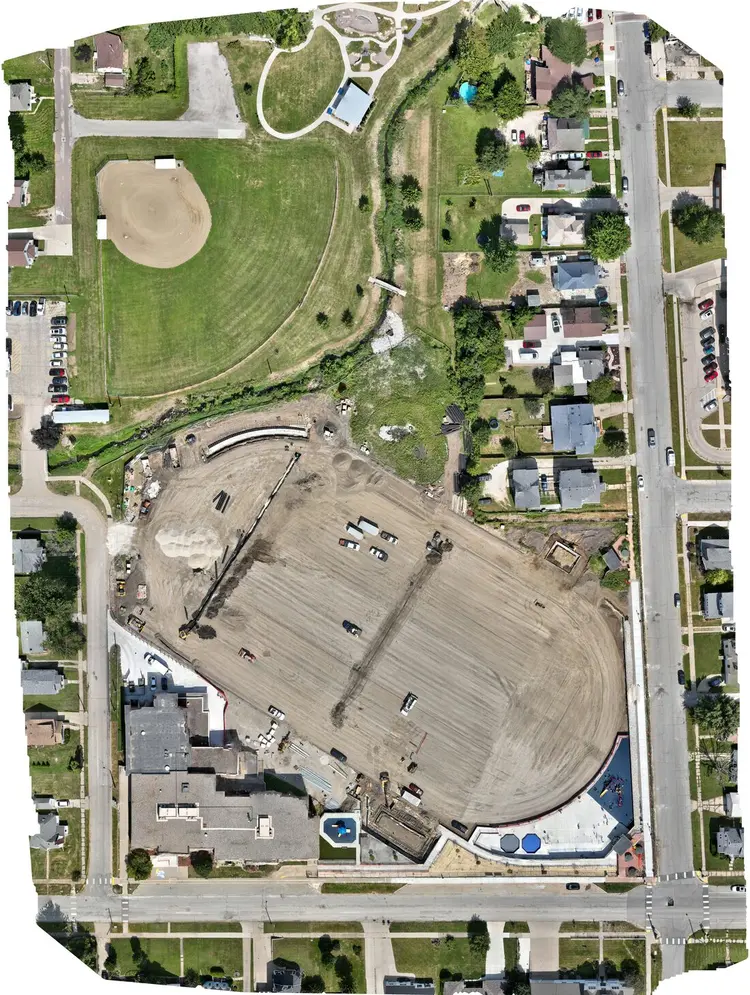
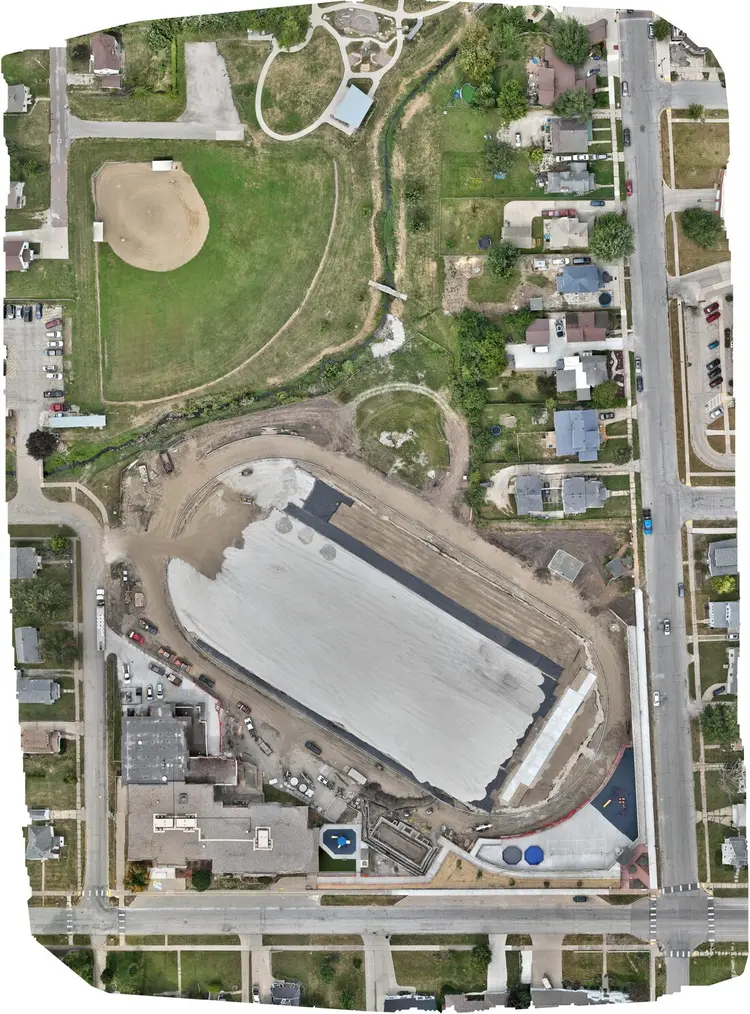
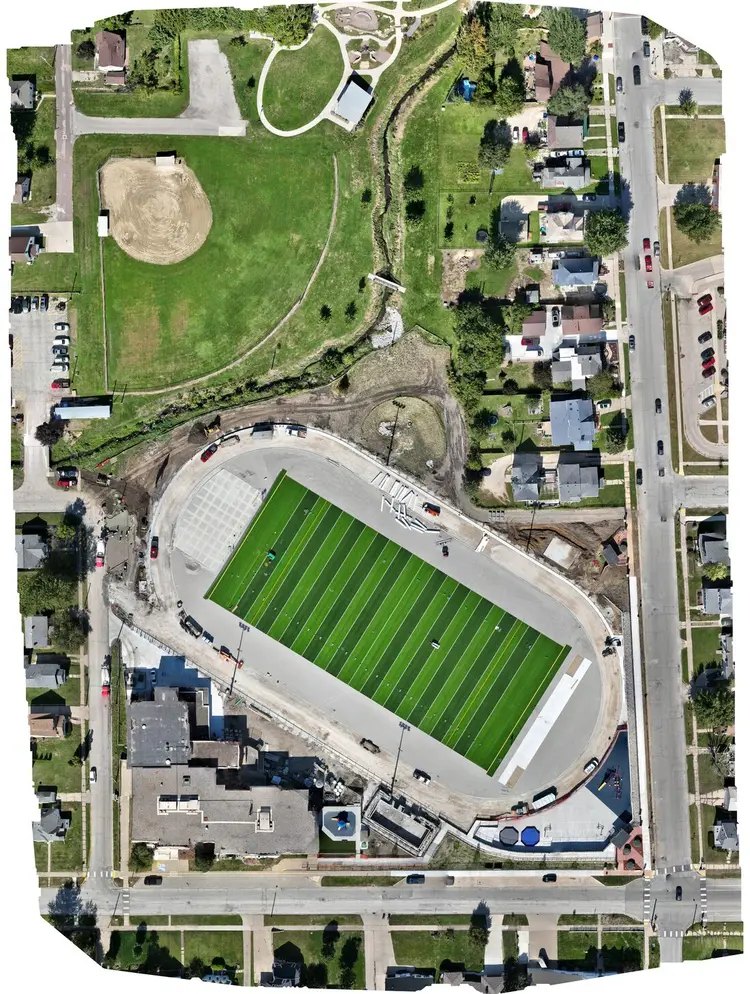
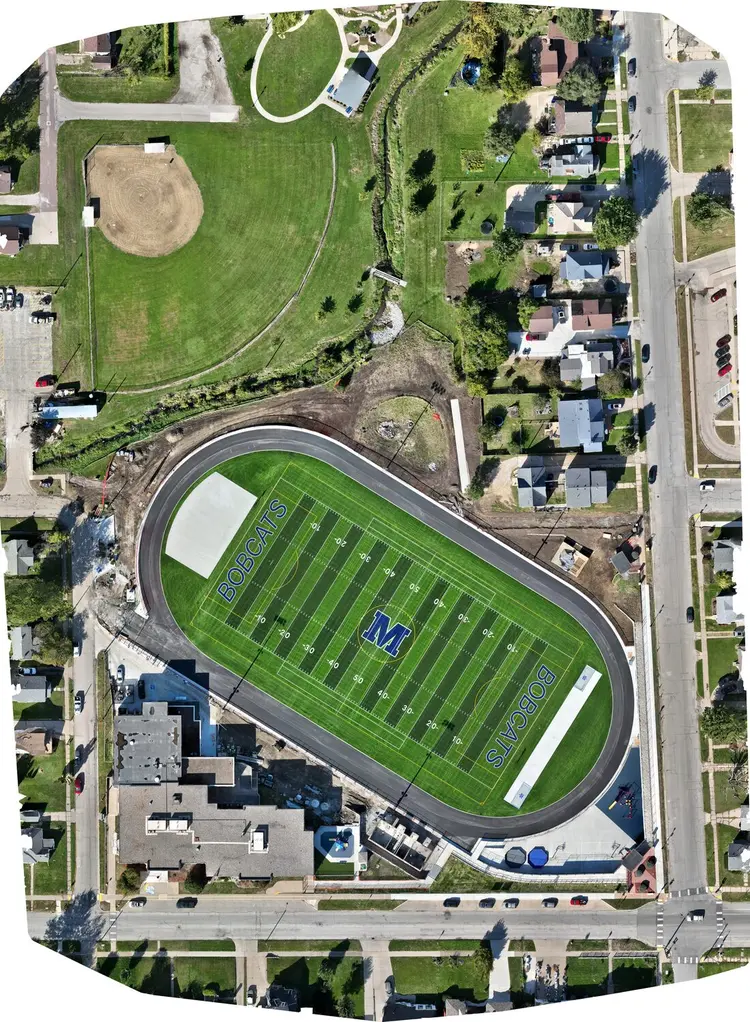
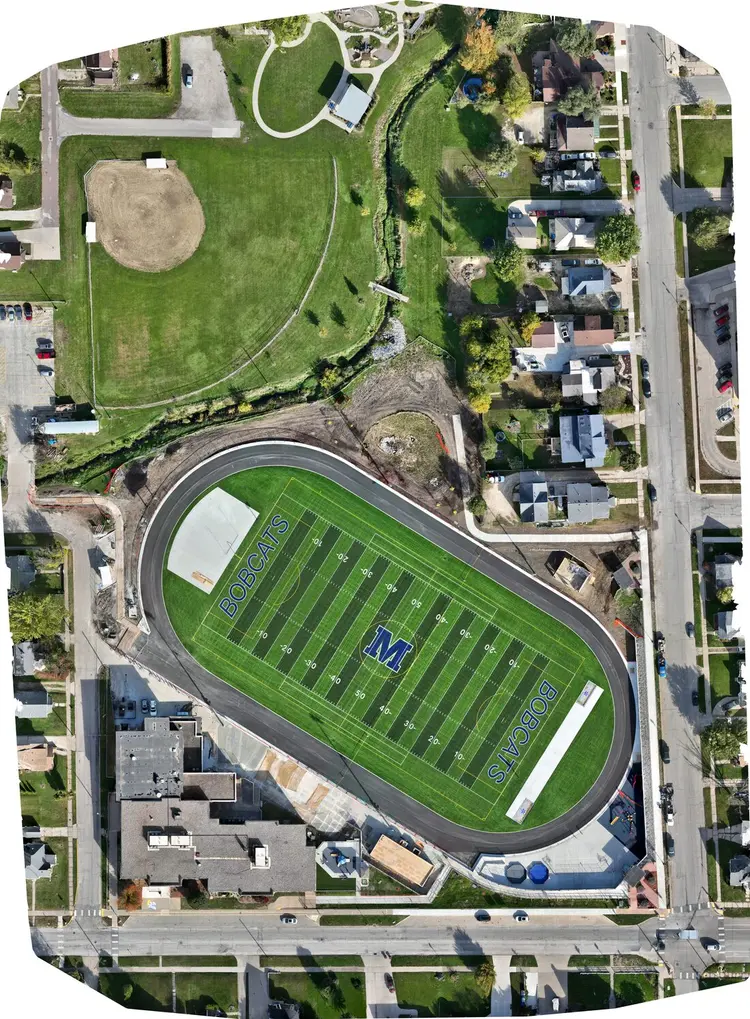
Eight of the nine flights, 18 July to 24 October 2025. Each is a measurable, to-scale record — not a snapshot. A ninth flight on 19 December closed the record after first snow.
Groundbreaking to grass
What the district actually got
Nine dated orthomosaics that a board member can compare side by side without a construction background. Oblique photography from each visit for newsletters and community updates. Progress video for the same. And a permanent record of a publicly funded project, captured while it was happening rather than reconstructed afterwards.
Boyd Jones brought it in on timeline and on budget, in public, with the board briefed the whole way. A documentation flight is one operator, one aircraft and roughly an hour, so keeping that record cost the site nothing — and it meant everyone, from the board to the trades, was answering “how is it going?” from the same picture.
Running a bond project that has to report to a board, a council, or a community? This is what that record looks like.
Start a documentation program →Project facts from public reporting by the Times‑Republican and the Marshalltown Community School District. Imagery flown under FAA Part 107 and delivered to Boyd Jones Construction.